Back to all articles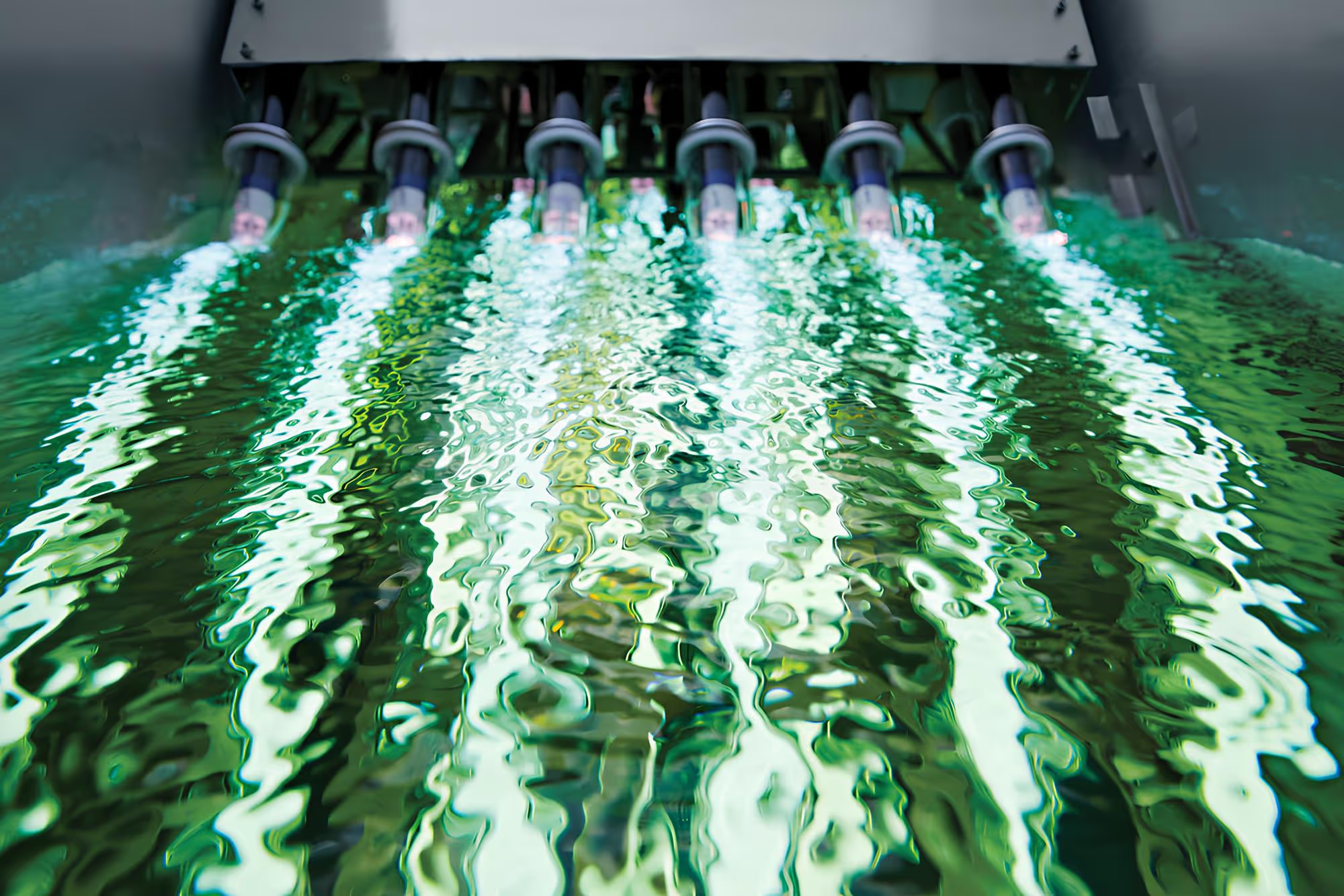

Disinfection options for treated wastewater
UV lamps submerged in a pool filled with purified wastewater (Source: Environmental & Science Engineering Magazine)
The disinfection of treated wastewater is a supplementary step in wastewater treatment, aimed at reducing the number of pathogenic microorganisms (bacteria, viruses, parasites), especially in cases where the receiving water body is sensitive, such as bathing waters, drinking water protection zones, or when the treated water is intended for reuse.
Most common disinfection methods:
- Chlorination: The best-known and most widely used method, involving the dosing of chlorine gas, sodium hypochlorite, or chlorine dioxide. It is effective against most bacteria; however, disinfection by-products (e.g. chlorinated organic compounds) may be formed. For this reason, its use is increasingly declining, particularly in environmentally sensitive areas.
- UV Radiation: A physical process in which ultraviolet light inactivates the DNA of microorganisms. Its advantages include the absence of chemical by-products, rapid action, and good controllability. Its effectiveness strongly depends on water transparency and suspended solids content.
- Ozonation: A highly oxidative process that destroys pathogens across a broad spectrum and is also capable of degrading certain micropollutants. Its disadvantages are high investment and operating costs, as well as technological complexity.
- Membrane Technologies (UF, MBR): In ultrafiltration or membrane bioreactor systems, disinfection is partly achieved through “physical filtration,” as membranes retain a significant proportion of bacteria and some viruses. These systems often replace or reduce the need for post-disinfection.
Summary
The selection of a disinfection method depends on the sensitivity of the receiving water, regulatory requirements, operating costs, and the desired water quality. While disinfection is often unnecessary for conventional discharge, it is essential for reuse applications or discharge into sensitive environments.