Types of drinking water sources in Hungary
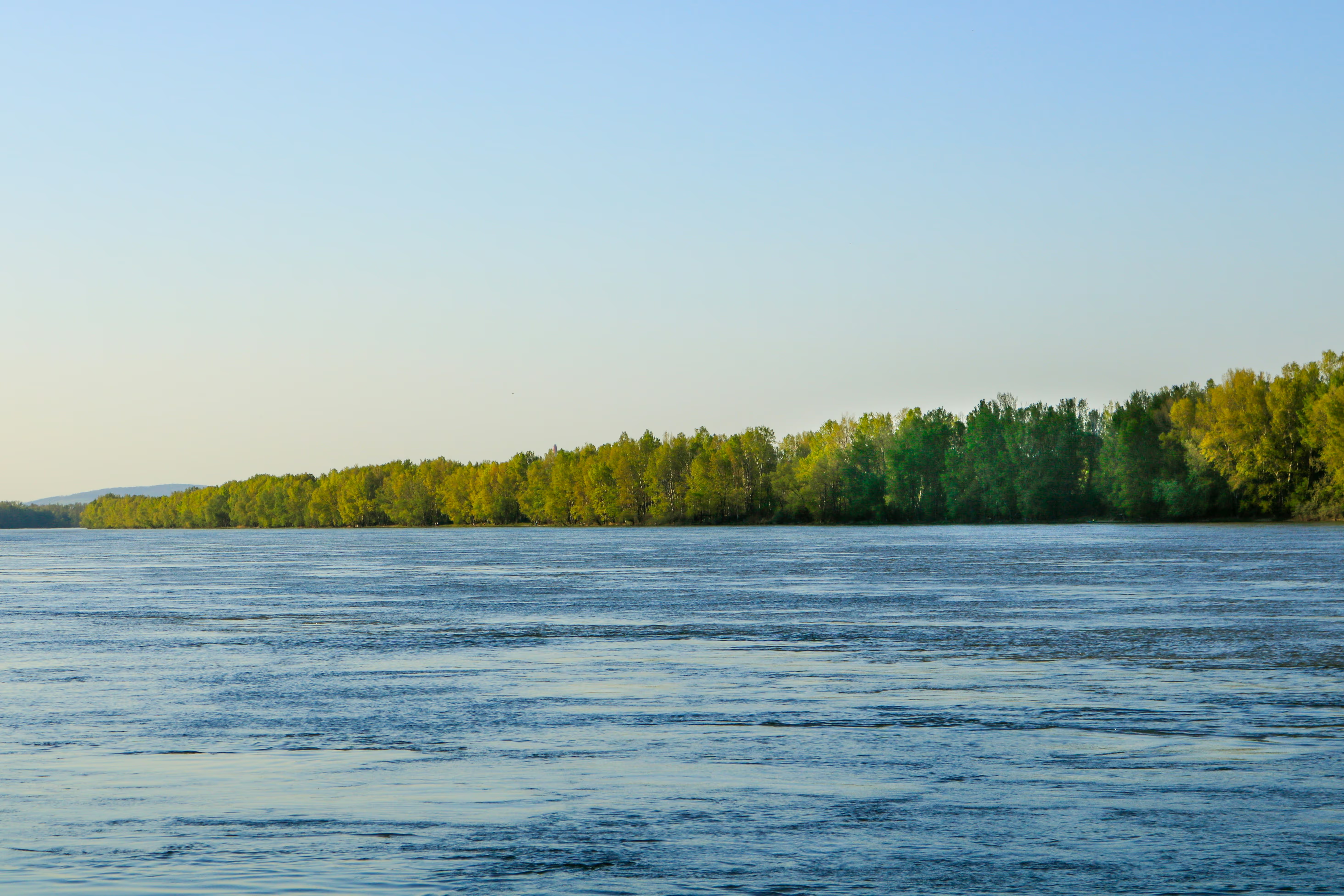
Hungary’s water supply is primarily based on groundwater resources. Approximately 95% of public drinking water supply is abstracted from groundwater sources. The remaining roughly 5–7% comes from surface waters (rivers, lakes) or other smaller local sources. Drinking water sources are surrounded by clearly defined protection zones, within which only permitted agricultural and industrial activities may be carried out.
Bank-Filtered Water Sources (~25–30% of drinking water supply)
Bank-filtered water sources are groundwater aquifers that are in direct hydraulic connection with a major river (such as the Danube or the Tisza). River water infiltrates through gravelly and sandy bank sediments, where it passes through a so-called biofilm layer and is naturally purified before reaching the wells. The drinking water supply of cities such as Budapest and Győr is based on bank-filtered water sources.
Advantages:
Bank-filtered water sources provide water of suitable quality, relatively stable composition, and are considered an almost inexhaustible resource.
Risks:
The quality and quantity of surface water directly affect the raw water abstracted from radial collector wells. Major industrial, agricultural, or accidental pollution of the river may damage the biofilm layer responsible for natural purification. River dredging on affected sections also poses a physical risk, as it can disturb the ecosystem. This creates a conflict of interest between navigation and flood protection on one hand and drinking water supply on the other; therefore, any intervention in the riverbed requires regulatory approval.
Deep Confined Aquifer Sources (~45–50% of drinking water supply)
Deep porous aquifer waters originate from water reserves trapped between two impermeable layers, characterized by slow recharge and high geological protection. These waters are practically mineral waters, having traveled from the surface to depths of several hundred meters over periods that may span thousands of years. Cities such as Debrecen, Szeged, Pécs, and Tatabánya are supplied from such aquifers.
Advantages:
Generally stable water quality with low microbiological contamination, requiring less treatment.
Risks:
Certain deeper layers may contain naturally occurring substances (e.g., iron, manganese, arsenic), necessitating additional treatment. Overexploitation of confined aquifers—when abstraction exceeds natural recharge over the long term—can lead to declining yields and, ultimately, degradation of the water source.
Karst Water Sources (~10% of drinking water supply)
Karst water flows through fractures and cavities in carbonate rocks (limestone, dolomite). Hungary has several significant karst water sources, for example in the Bükk Mountains, Aggtelek region, and the Transdanubian Mountains. These are extremely sensitive resources, making protection zones critically important. Cities such as Miskolc are supplied from karst water sources.
Advantages:
Cold, high-quality water, often with a high mineral content.
Risks:
In open karst systems, surface water can enter the karst rapidly, leading to temporary turbidity and microbial contamination after heavy rainfall. The risk of surface pollutants infiltrating the system is relatively high.
Shallow Groundwater and Near-Surface Water Sources (~5% of drinking water supply)
Shallow groundwater or near-surface aquifers are typically in direct contact with the surface environment. Drinking water utilities use these sources only when, due to geographical conditions, no better alternatives are available, and they are mainly used for local water supply. According to Hungary’s River Basin Management Plan, surface water abstraction for drinking purposes occurs periodically from 17 water bodies, including Lake Balaton, Lake Tisza, and several upland reservoirs. Surface water abstraction is primarily used to meet industrial and agricultural demands. The largest Hungarian city supplied with drinking water from such a source is Szolnok.
Advantages:
Simple abstraction and the ability to address certain emergency situations.
Risks:
Greater vulnerability to surface pollution (e.g., nitrates, microbiological contamination), requiring significantly more intensive water treatment and source protection than average. The available water quantity is closely linked to medium-term precipitation patterns.
Surface Water Sources (~5–7% of drinking water supply)
Water abstraction from surface waters—such as lakes or direct river intakes—accounts for a smaller share of Hungary’s drinking water supply. This approach is mainly applied where sufficient groundwater resources are unavailable or where advanced treatment technologies are in place.
Advantages:
Provides a solution for public water supply where other sources are not feasible.
Disadvantages:
Surface water quality can fluctuate significantly depending on season, precipitation conditions, and pollution (e.g., agricultural nutrients, industrial chemicals). The abstracted water requires complex treatment (sedimentation, filtration, disinfection), which involves substantial costs.
